

-
Homestay Introduction
-
Room Introduction
-
Brother Tsan guide
-
Jiufen travel note
- Jiufen North-eastern Taiwan trip - part 1
- Jiufen North-eastern Taiwan trip - part 2
- Fulong Sand-sculpting Festival
-
Traffic Information
-
Message Board
Fulong is one of the best beaches in northern Taiwan. It has a long sandy beach and is a
suitable place for water sports, such as sailing and surfing. The Visitor Centre provides a
video introduction to the north-east coast of Taiwan, explaining the origin of its majestic
landscape. For those who would like to capture a bird’s eye view of the coast, the facility of
paragliding at the Visitor Centre is not to be missed.

Before the launch of Caoling Cycling Tunnel in 2008, the 2.7 km long tunnel was used for the railway service connecting the north and the east coast until it was replaced by the current railway in 1986. This tunnel also played an important role in the creation of an old Taiwanese folk song – “Diu Diu Dong Ah”.
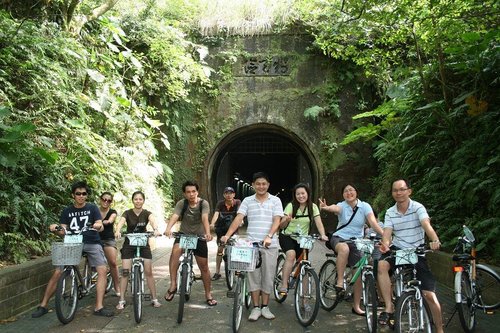
The contemporary Tunnel connects Fulong with Shicheng, a seaside village bordering Taipei County and Ilan County.
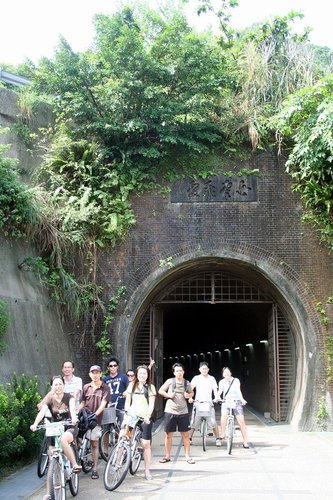
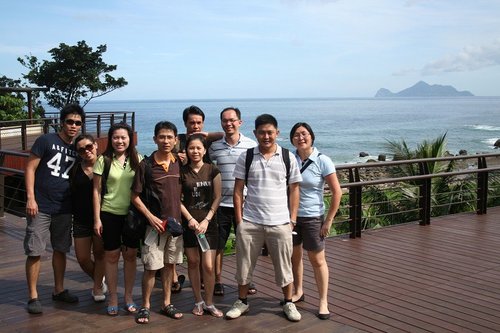
Take a break at the observatory deck at the south exit of the tunnel. Enjoy the view of Turtle Island and the Pacific Ocean.
Given its location, Turtle Island has also been an index for people travelling between Taipei and Ilan County. Especially for those who left Ilan for Taipei to make a living.Seeing the sight of Turtle Island, they know they are nearly home. Turtle Island is also a natural reserve that supports the lives of 13 species of native butterflies and 33 species of birds.
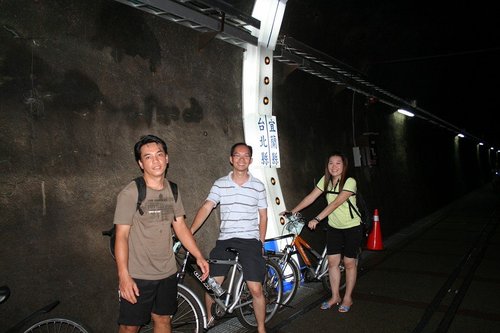
The meeting point for the two counties in the tunnel.
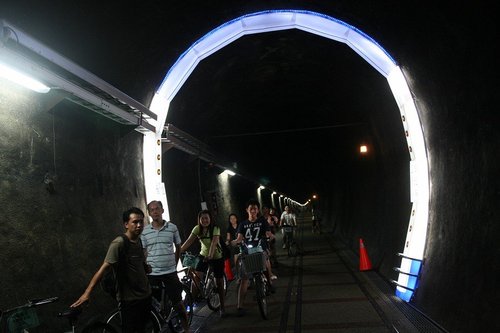
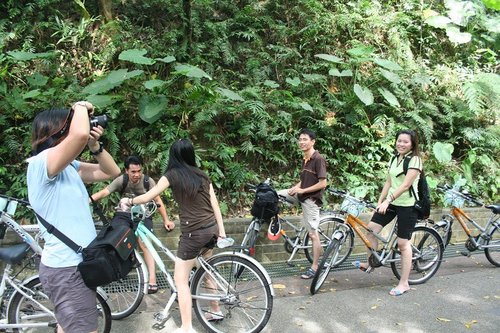
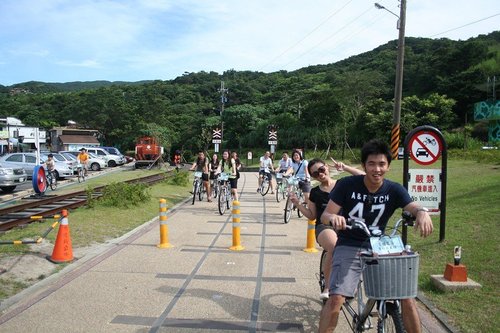
After the cycling adventure, we returned to Fulong Beach, where the International Music Festival and Sand Art Festival takes place annually.
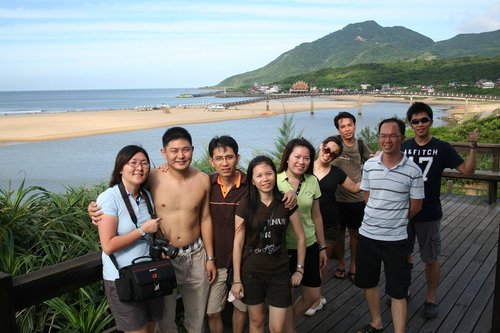
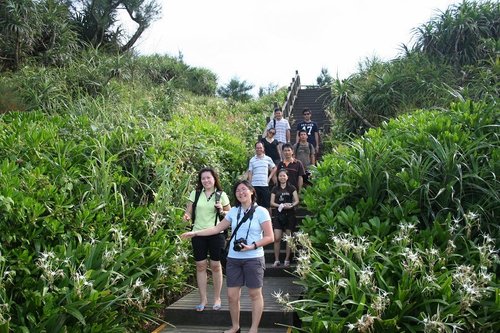
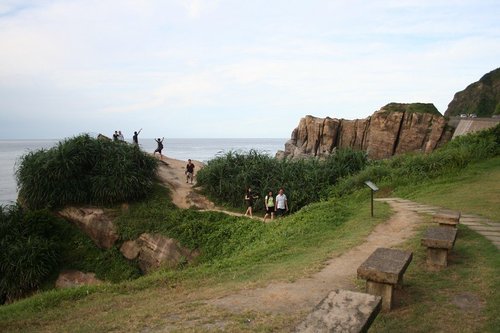
Longdong Cape is a very scenic spot with fabulous views of the cliffs that drastically rises up to more than 100m high.
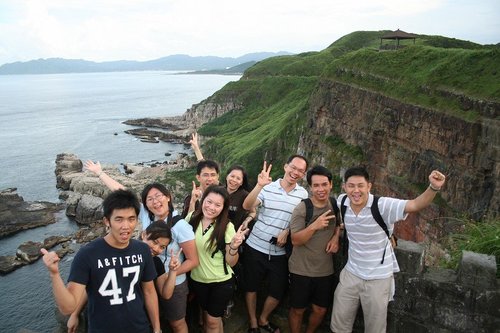
The beautiful coast that earns Taiwan the name of “Ilha Formosa”!
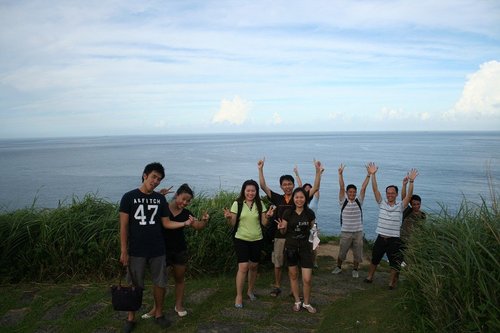
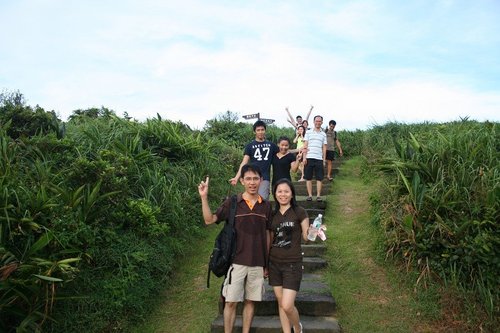
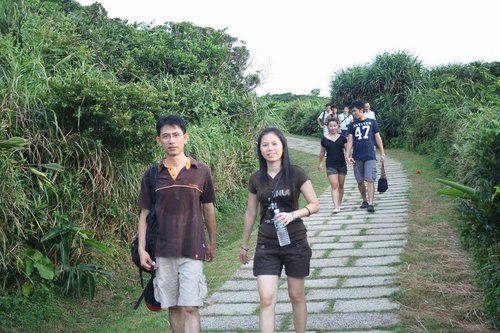
Towards west via Bitou, we visited a place called Nan Ya. From here, a fantasy journey with astoundingly eroded and coloured coastal rocks began (and we tried to move the rock like hard-working ants).
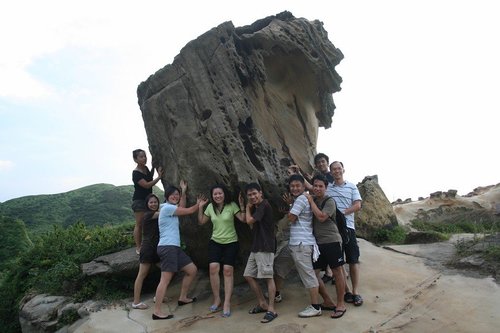
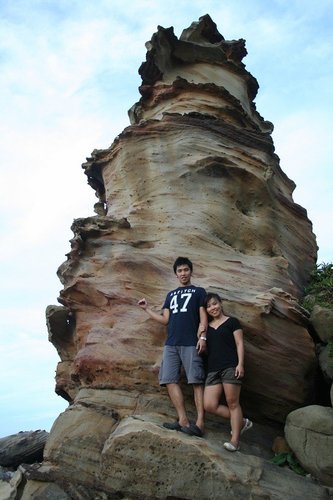
A group photo in front of the most famed Nan Ya Qiyian. Some thinks it looks like an ice cream cone; other thinks it has the shape of bamboo shoot.
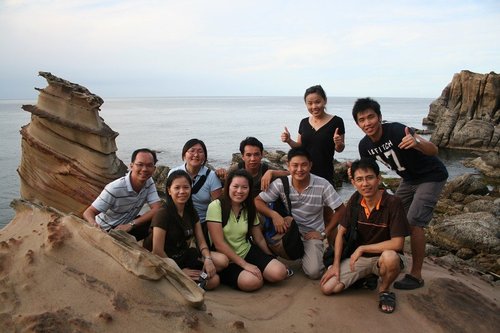
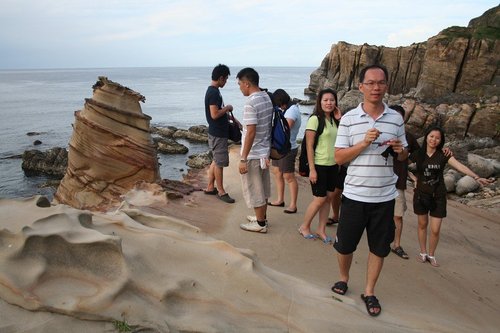
Another famous sea-eroded rock in Nan Ya. It is nicknamed “the Seal Rock”.
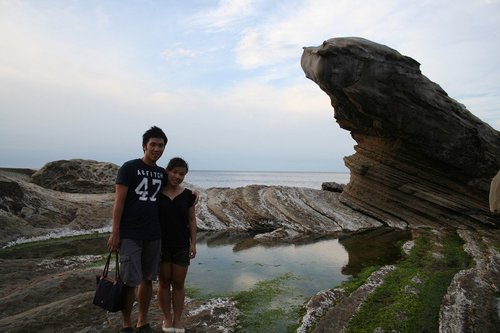
In late autumn and winter, East Asia Monsoon intensively calls on Taiwan’s northeast coast and brings strong winds, which resulted in high swell. Sometimes, the swell is so elevated that it covers the Seal Rock.
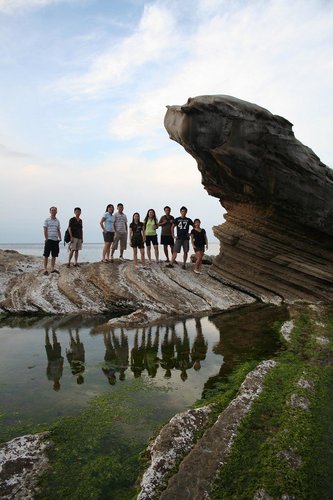
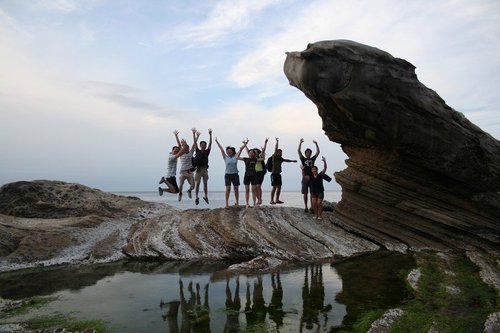
Mr. Bao and Miss. Li wished that their relationship will be as solid and long-lasting as the rock. All best wishes to the lovely couple!
On the third day of the tour, we visited the Centre of Traditional Arts in Ilan County.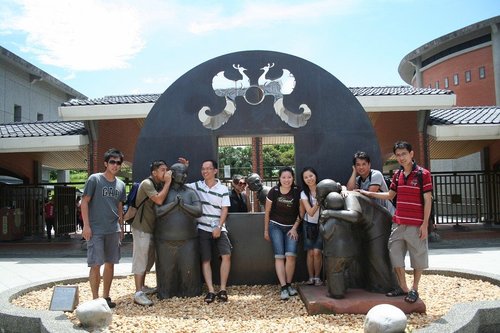
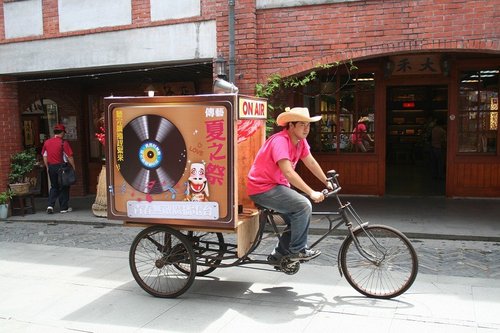
A staff is riding the tricycle to promote the Centre’s summer exhibition.
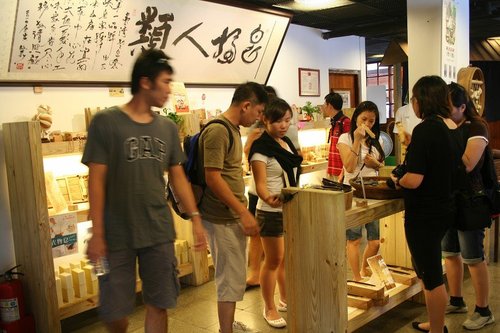
The Centre is divided by different houses, and each house has a theme. The Hot-Spring House illustrates the history and culture of hot-spring in Taiwan and the island’s geographical advantages.
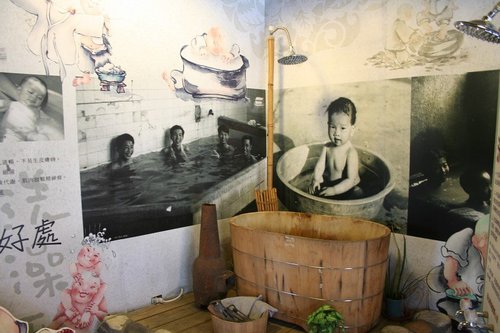
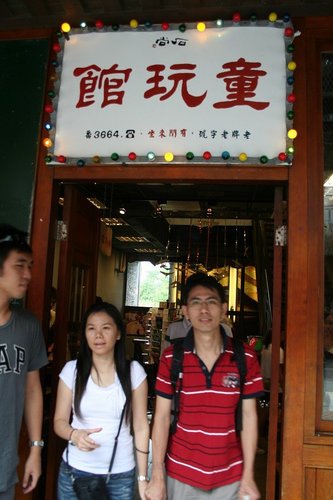
The House of Children’s Toys recreated Taiwanese Children’s entertainment during the Rural Era (1930-1950) and Handiwork Era (1950-1970).
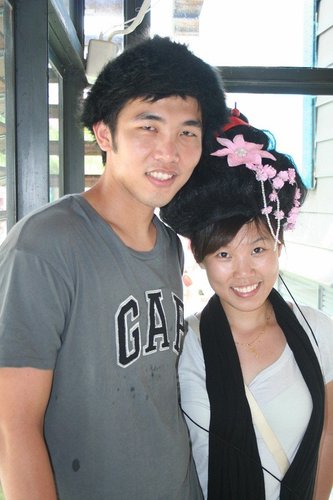
Chinese costumes from the Qing Dynasty.
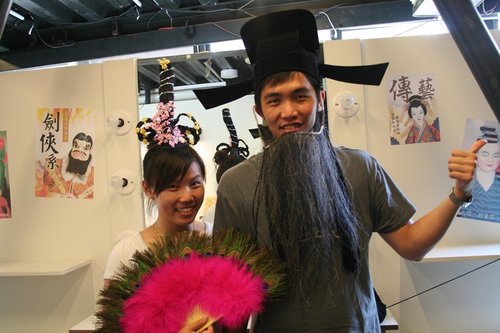
Try on the Mogolian costumes to get a feel of the oriental desert culture.
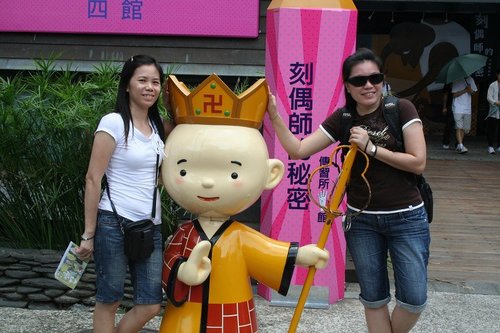
Go on a pilgrimage with the monk at The House of “The Journey to the West”…
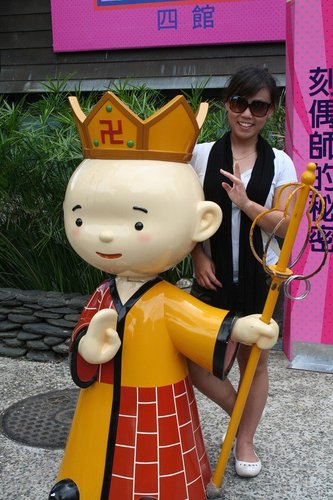
with more company this time!
All the houses are equipped with air conditioning, which make them all very enjoyable and “chilled".
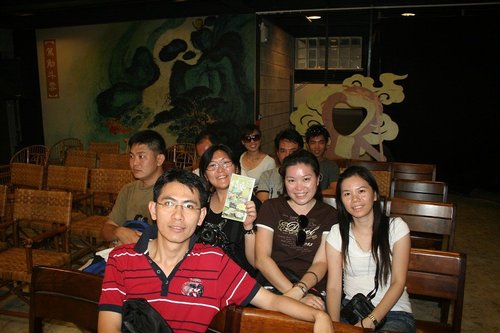
The Centre of Traditional Arts occasionally serves as a film studio. Let’s make the most of the stage properties.
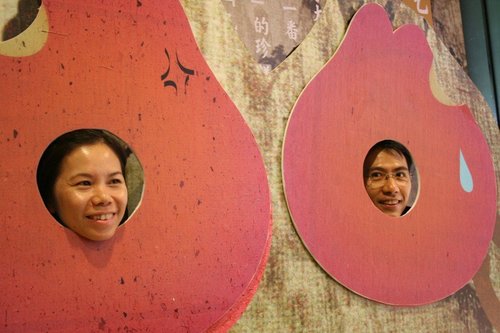
A staple collection at the House of Chinese Calligraphy.

A Taiwanese pastry chef performs the traditional culinary skills of “Spring Onion Candy”.
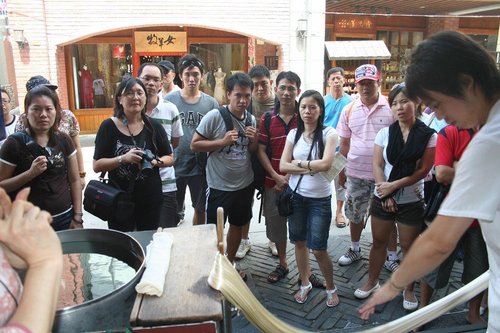
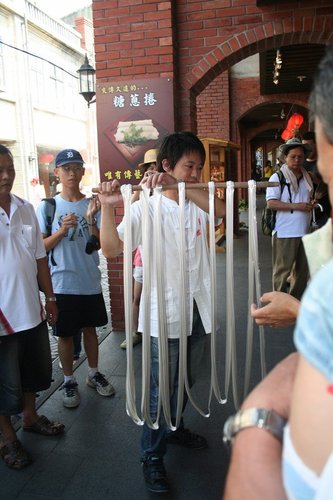
Spring onion candies are made from caramelised cane sugar. Before it cools down and solidifies, the caramel can be stretched up to ten meters long or so.
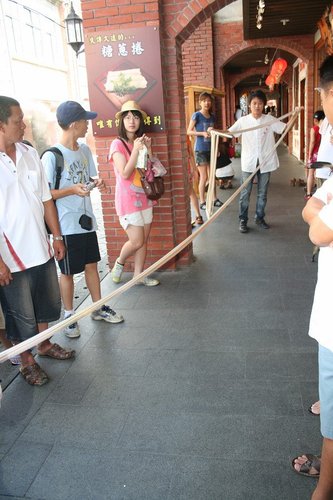
Now, the petit fours are served!
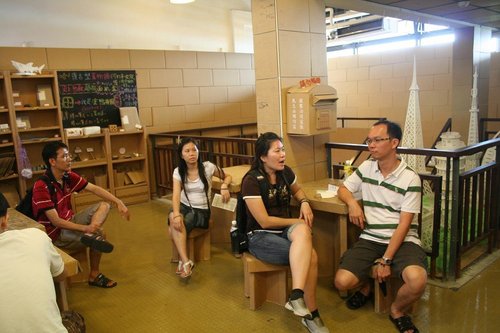
The Cardboard House is filled with green ideas. Every piece of furniture, including the table and the chairs, are made of cardboard.
The next stop: Jiaoshi Hot Springs
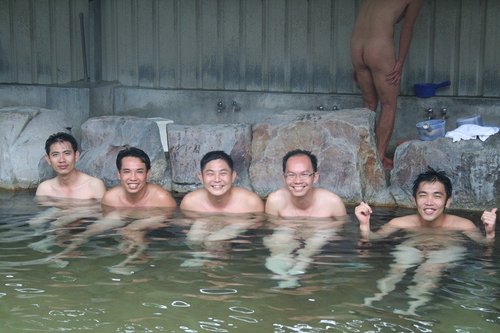
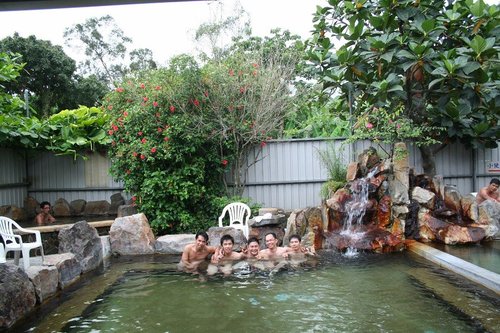
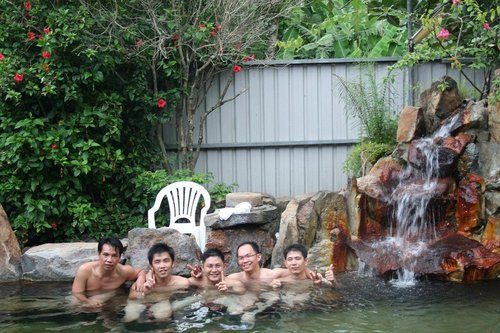
The hot spring resort we went to is partially covered and partially outdoor. Many of the hot spring resorts in Taiwan are separated by gender, in which case nudity is expected and swimming costumes are not allowed to be brought into the water.
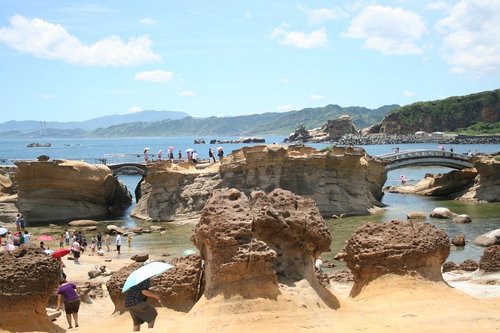
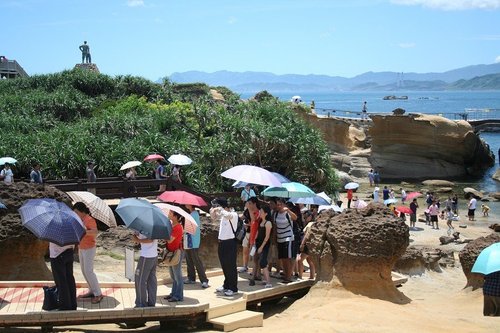
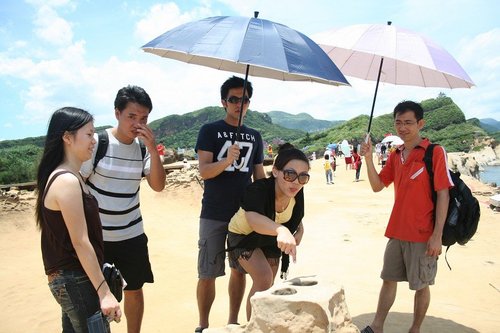
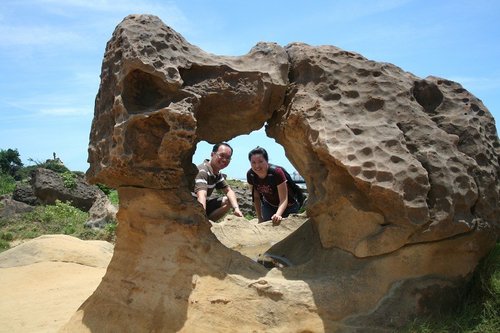
One of the destinations of the last day’s tour – Yeliu – one of the top scenic attractions on the north coast. Hundreds of bizarre rocks, formed by sea and wind erosion, can be observed here.
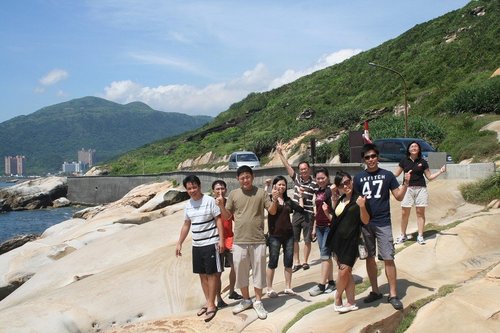
Mr. Tan seemed to have a good time on this specific spot.
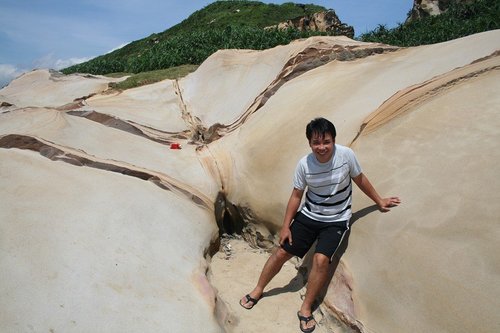
This is a dreamland for all.
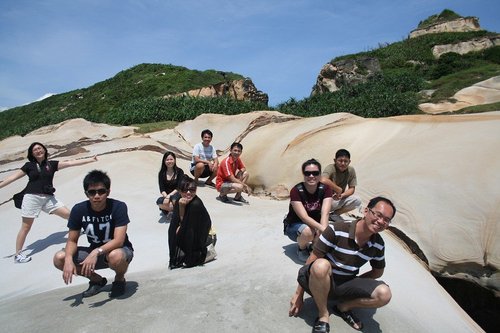
On a sunny cloudless day, the views of the beautiful ocean and the clear coastal line can be easily appreciated.
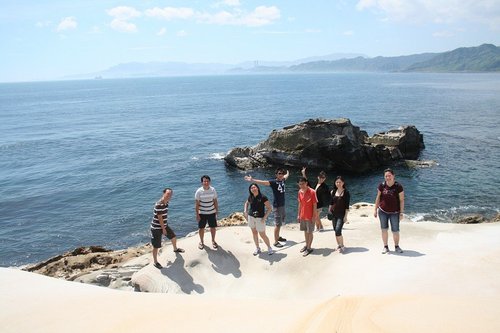
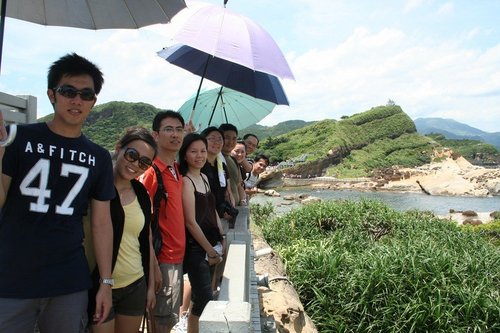
An unforgettable experience, best to share with your best friends.
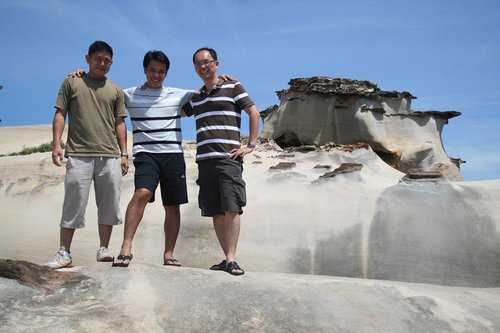
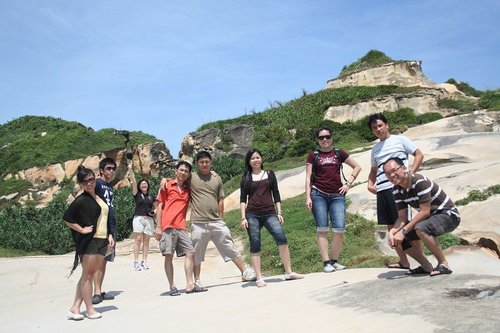
Despite the temperature and strong sunlight in summer, the scenery and the ocean breeze only made all of us want to saunter for a bit longer.
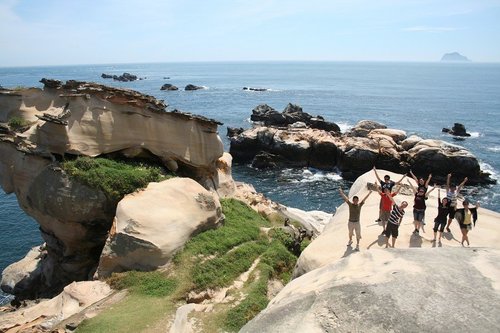
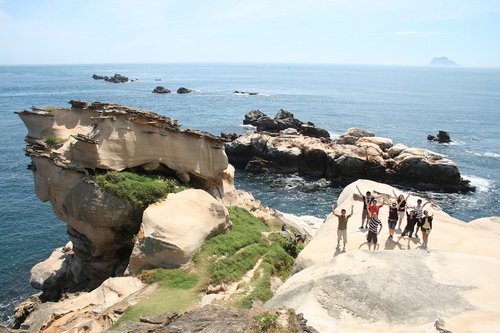
A happy group on a merry journey.
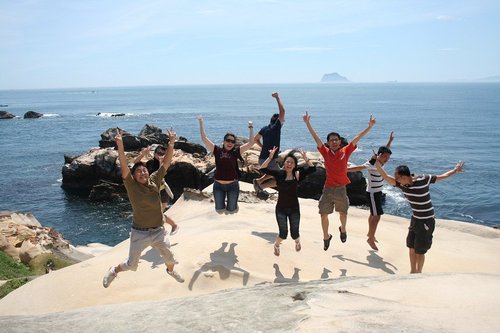
Mr. Wu and Mr. Chen can jump!
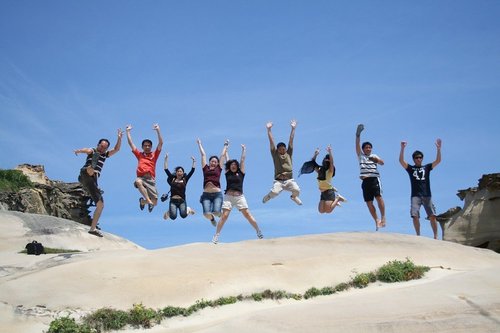
Yeliu is indeed an outdoor classroom for geologists.

The wonder of the unique rock formations is to be unfold.
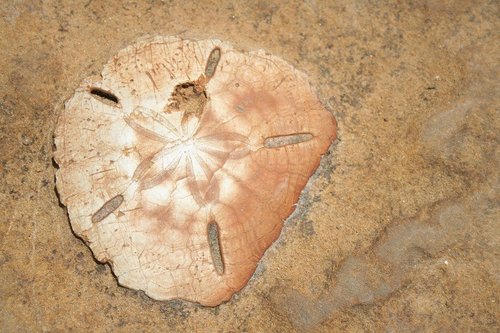
A seashell fossil.
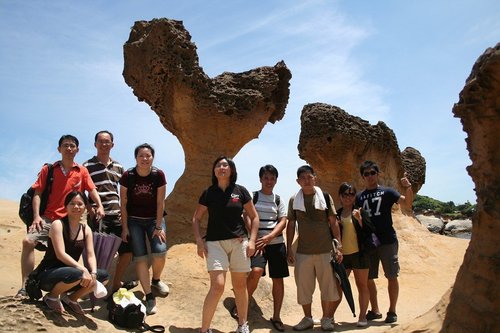
The Rock of The Elephant’s Trunk
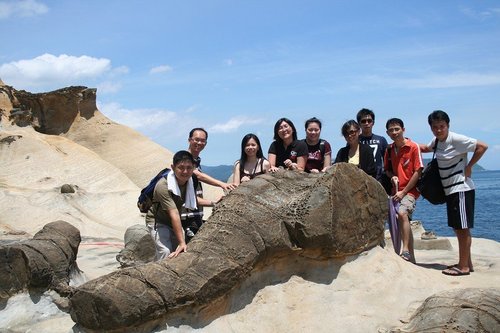
The Whale Rock
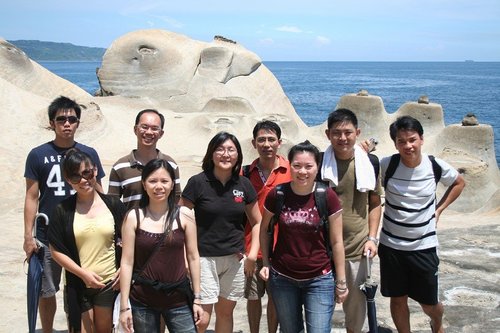
The Rock of The Duke of Thunder
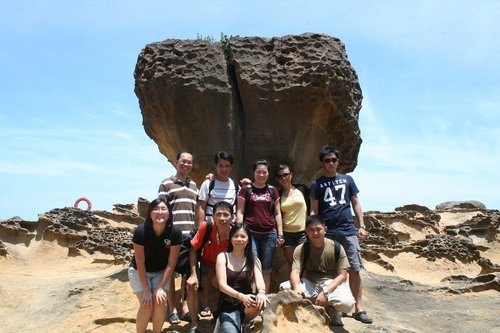
The Fair Lady
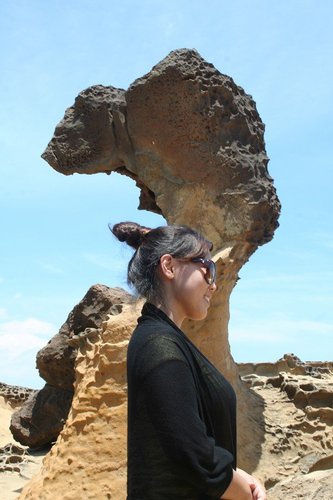
The ROCK-n-roll dance floor!
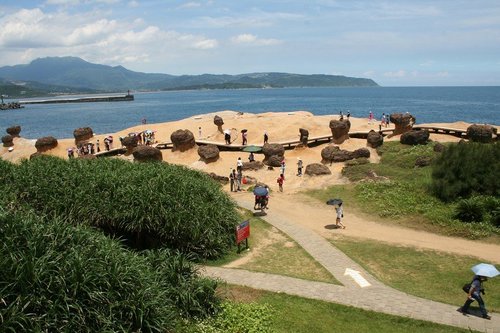
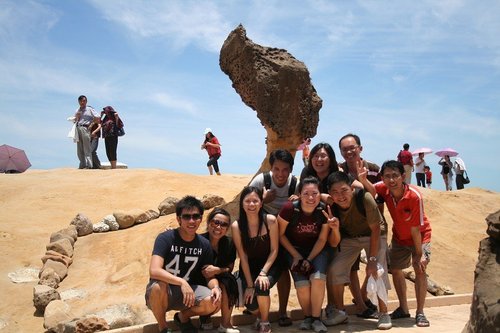
Finally, we had the honour to take a photograph with the “Queen”. (The rock is nicknamed “Queen’s Head” by Taiwanese)
The Pignose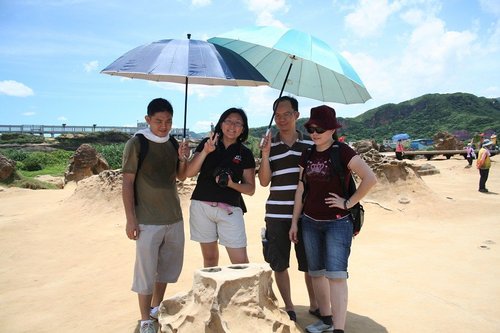
with enormous nostrils!
We recharged ourselves with a delicious duck meal at Jin Bao Li Restaurant in Jin Shan, before heading up to Xiaoyoukeng in Yangmingshan National Park.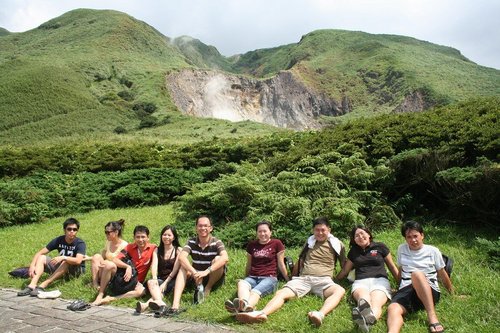
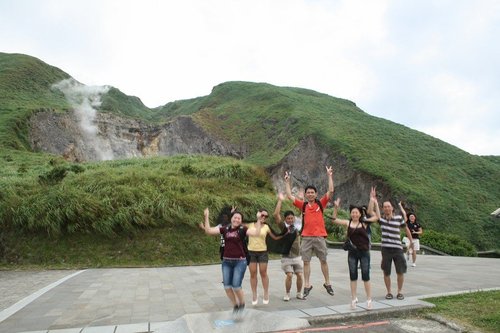
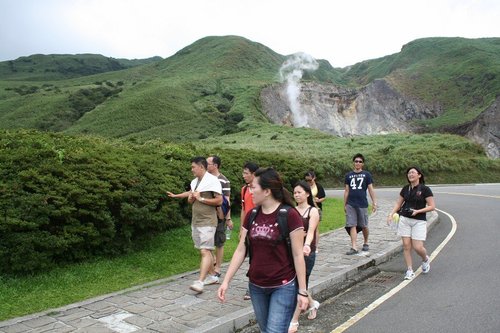
Yangmingshan National Park is based on Tatun Volcano Group and contains numerous sulphur steam vents. Xiaoyoukeng is the largest vent on the west side of Cisingshan in the park.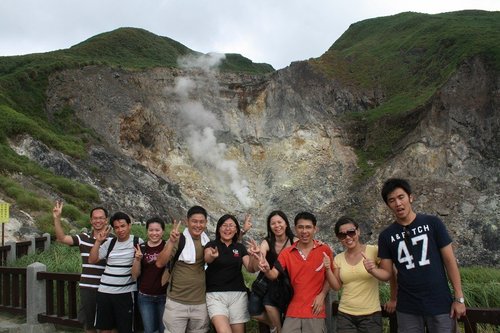
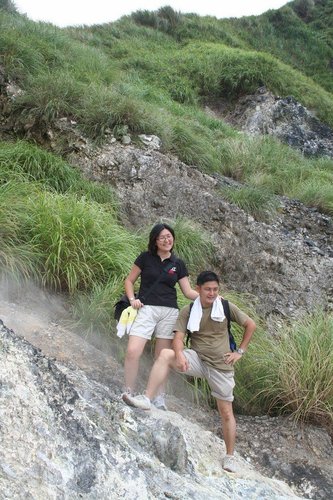
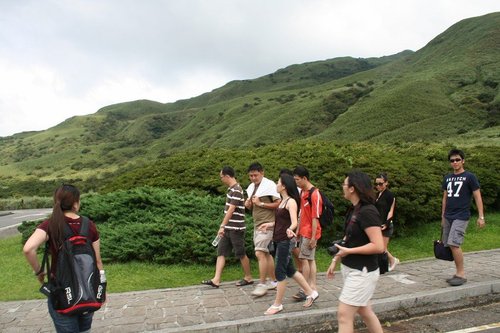
Xiaoyoukeng has never stopped releasing the sulphur steam as the water bubbles away beneath the soil. Follow (and stay within) the visitor’s trail, the hiss can be heard and the heat can be felt as you approach the vent.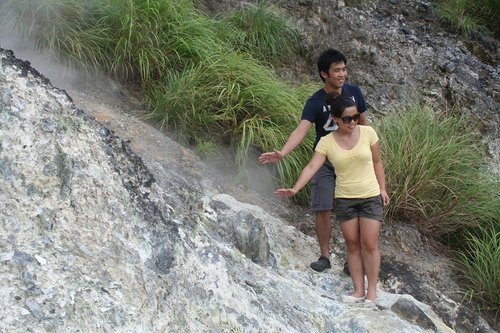
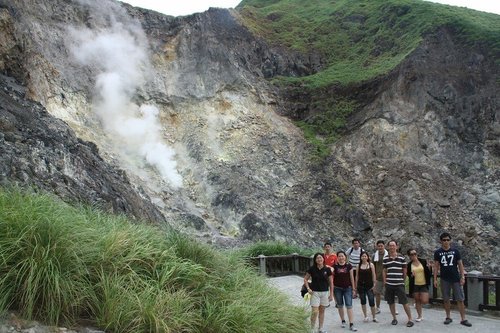
After our visit to Yangmingshan National Park, HappyLand’s tour is concluded.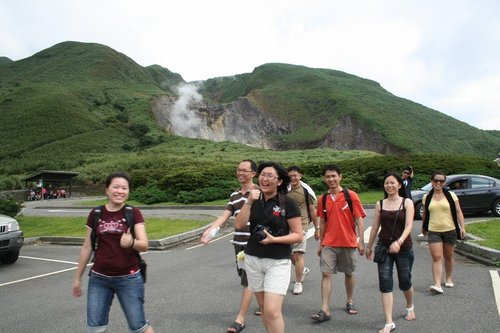
HappyLand would like to thank our Malaysian friends for the great company last summer. We were particularly impressed by your stamina on the Bitou Cape Trail regardless of the intense sunlight!
Before the launch of Caoling Cycling Tunnel in 2008, the 2.7 km long tunnel was used for the railway service connecting the north and the east coast until it was replaced by the current railway in 1986. This tunnel also played an important role in the creation of an old Taiwanese folk song – “Diu Diu Dong Ah”.
The contemporary Tunnel connects Fulong with Shicheng, a seaside village bordering Taipei County and Ilan County.
Take a break at the observatory deck at the south exit of the tunnel. Enjoy the view of Turtle Island and the Pacific Ocean.
Given its location, Turtle Island has also been an index for people travelling between Taipei and Ilan County. Especially for those who left Ilan for Taipei to make a living.Seeing the sight of Turtle Island, they know they are nearly home. Turtle Island is also a natural reserve that supports the lives of 13 species of native butterflies and 33 species of birds.
The meeting point for the two counties in the tunnel.
After the cycling adventure, we returned to Fulong Beach, where the International Music Festival and Sand Art Festival takes place annually.
Longdong Cape is a very scenic spot with fabulous views of the cliffs that drastically rises up to more than 100m high.
The beautiful coast that earns Taiwan the name of “Ilha Formosa”!
Towards west via Bitou, we visited a place called Nan Ya. From here, a fantasy journey with astoundingly eroded and coloured coastal rocks began (and we tried to move the rock like hard-working ants).
A group photo in front of the most famed Nan Ya Qiyian. Some thinks it looks like an ice cream cone; other thinks it has the shape of bamboo shoot.
Another famous sea-eroded rock in Nan Ya. It is nicknamed “the Seal Rock”.
In late autumn and winter, East Asia Monsoon intensively calls on Taiwan’s northeast coast and brings strong winds, which resulted in high swell. Sometimes, the swell is so elevated that it covers the Seal Rock.
Mr. Bao and Miss. Li wished that their relationship will be as solid and long-lasting as the rock. All best wishes to the lovely couple!
On the third day of the tour, we visited the Centre of Traditional Arts in Ilan County.
A staff is riding the tricycle to promote the Centre’s summer exhibition.
The Centre is divided by different houses, and each house has a theme. The Hot-Spring House illustrates the history and culture of hot-spring in Taiwan and the island’s geographical advantages.
The House of Children’s Toys recreated Taiwanese Children’s entertainment during the Rural Era (1930-1950) and Handiwork Era (1950-1970).
Chinese costumes from the Qing Dynasty.
Try on the Mogolian costumes to get a feel of the oriental desert culture.
Go on a pilgrimage with the monk at The House of “The Journey to the West”…
with more company this time!
All the houses are equipped with air conditioning, which make them all very enjoyable and “chilled".
The Centre of Traditional Arts occasionally serves as a film studio. Let’s make the most of the stage properties.
A staple collection at the House of Chinese Calligraphy.
A Taiwanese pastry chef performs the traditional culinary skills of “Spring Onion Candy”.
Spring onion candies are made from caramelised cane sugar. Before it cools down and solidifies, the caramel can be stretched up to ten meters long or so.
Now, the petit fours are served!
The Cardboard House is filled with green ideas. Every piece of furniture, including the table and the chairs, are made of cardboard.
The next stop: Jiaoshi Hot Springs
The hot spring resort we went to is partially covered and partially outdoor. Many of the hot spring resorts in Taiwan are separated by gender, in which case nudity is expected and swimming costumes are not allowed to be brought into the water.
One of the destinations of the last day’s tour – Yeliu – one of the top scenic attractions on the north coast. Hundreds of bizarre rocks, formed by sea and wind erosion, can be observed here.
Mr. Tan seemed to have a good time on this specific spot.
This is a dreamland for all.
On a sunny cloudless day, the views of the beautiful ocean and the clear coastal line can be easily appreciated.
An unforgettable experience, best to share with your best friends.
Despite the temperature and strong sunlight in summer, the scenery and the ocean breeze only made all of us want to saunter for a bit longer.
A happy group on a merry journey.
Mr. Wu and Mr. Chen can jump!
Yeliu is indeed an outdoor classroom for geologists.
The wonder of the unique rock formations is to be unfold.
A seashell fossil.
The Rock of The Elephant’s Trunk
The Whale Rock
The Rock of The Duke of Thunder
The Fair Lady
The ROCK-n-roll dance floor!
Finally, we had the honour to take a photograph with the “Queen”. (The rock is nicknamed “Queen’s Head” by Taiwanese)
The Pignose
with enormous nostrils!
We recharged ourselves with a delicious duck meal at Jin Bao Li Restaurant in Jin Shan, before heading up to Xiaoyoukeng in Yangmingshan National Park.
Yangmingshan National Park is based on Tatun Volcano Group and contains numerous sulphur steam vents. Xiaoyoukeng is the largest vent on the west side of Cisingshan in the park.
Xiaoyoukeng has never stopped releasing the sulphur steam as the water bubbles away beneath the soil. Follow (and stay within) the visitor’s trail, the hiss can be heard and the heat can be felt as you approach the vent.
After our visit to Yangmingshan National Park, HappyLand’s tour is concluded.
HappyLand would like to thank our Malaysian friends for the great company last summer. We were particularly impressed by your stamina on the Bitou Cape Trail regardless of the intense sunlight!